

5 Steps for Anxious Overachievers if Stress is Ruining Happiness

5 Steps for Anxious Overachievers if Stress is Ruining Happiness

You have that one friend who gets it all done. All of it. The classic overachiever.

Everybody knows that she’ll win the awards, earn the degrees, chair the committee, keep an immaculate home, and get the raise. All the while smiling and keeping fit enough to wear super sharp clothes.

She’s good at everything and looks good while she’s at it.

And secretly, she’s a wreck. Being an overachiever is exhausting work and her drive isn’t fueled by superhuman motivation or divine inner strength. It’s good old-fashioned anxiety.

She’s a classic anxious overachiever.  She’s afraid she really isn’t good enough, smart enough, strong enough. And if she doesn’t keep moving someone will find her out.

Experts have a name for it. Imposter syndrome.

Can you relate?

The Anxious Overachiever and Imposter Syndrome

  • Was your business idea just good timing?
  • Is your wealth just a lucky break?
  • Does that promotion really reflect how good you are at your job or is it simply that your boss thinks more of you than he should?

Impostor syndrome puts a name to the inner turmoil many successful people feel at not being able to enjoy, embrace, or accept their own successes.

If you cope with this syndrome, you might experience life on a continuum of self-doubt and even self-loathing regarding your accomplishments. Even despite solid, positive evidence of your strengths, talents, competencies, and leadership.

You may be routinely plagued by thoughts that you’re a fraud and don’t actually deserve the good fortune and benefits that accompany your achievements. Worse, you may even engage in some measure of self-sabotage to compensate for the success you feel is undeserved.

The Anxious Overachiever and Self-Sabotage

Sadly, many overachievers allow their feelings of self-doubt and worry to fester and grow. Unprocessed and unexplored, this sense of phoniness and inauthenticity exacerbates a need to balance things out.

Amid the overachieving, you might simultaneously engage in behavior that undermines your success or directs attention away from yourself. You may throw yourself into people pleasing, excessive diligence, procrastination, even hiding your qualifications or capabilities and negating any incoming praise.

In addition, anxious overachievers tend to ride themselves with merciless self-talk.

Inner criticism and reflection on mistakes are constant. So much so that many an overachiever resists trying areas of business, less certain realms of work, or any new experience for fear that they won’t be as successful. Staying stuck then fulfills their own self-doubt.

All the while, they continue to climb the ladder of certain success in hopes of someday feeling worthy of the accolades. Hoping sometime to be at peace and content with what they have to offer their loved ones, workplace, and communities.

Unfortunately, relentless drive and crossed fingers won’t make you feel worthy or quell your anxiety. However, there are steps you can take to interrupt and challenge the effect being an overachiever with imposter syndrome has on you and your life.

5 Steps to Overcoming Impostor Syndrome

What can you do to deal with your fear of being discovered as an imposter, or of letting yourself down?
Consider these helpful steps for coping with and overcoming impostor syndrome:

1) Identify problematic thought patterns

Anxious thoughts often race in and out without being challenged. And, sometimes we can’t believe everything we think!

Slow things down, breathe.

Become aware of and identify thoughts that support the false notion that you are an undeserving imposter. Just noticing and naming them will help you feel more in control and able to choose whether to indulge them. Research indicates that naming our troubling emotions (anxiety, embarrassment, shame) helps reduce them. Noticing the thoughts that lead to upsetting emotions can help you pinpoint which thoughts you might need to challenge.

2) Acknowledge your own abilities and achievements

You accept responsibility for your losses and mistakes, right? Well, give your wins equal treatment. To maintain a balanced view, simply list the things you do well and list those that need improvement.

If you’re so used to dwelling on your perfectly human faults rather than your strengths that you can’t list your positive traits and successes, or you explain your successes away, try to find a pattern of positive comments you’ve received from others over the years. Have teachers, coaches, supervisors, friends, or others noticed the same things? Challenge yourself to believe them.

3) Assign yourself value appropriately

When certain tasks or skills come easily, you may think the right and humble thing to do is downplay your abilities. Sometimes indulging imposter syndrome seems like a healthy dose of humility. However, recognize that humility is not rooted in self-deprecation or fear.

True humility is an accurate, honest, balanced appraisal of yourself. You know how you think about your best friend or favorite boss? You know them pretty well, and you admire them for their strengths. You also know their blind spots and weaknesses, but you think well of them anyway, and dwell on all the reasons you like them. Just treat yourself the same way.

4) Focus on your contribution, not comparisons or perfection

Recognize that what you bring to the table is enough. Whether your contribution is perfect, fully formed or comparable to the guy’s in the seat next to you is immaterial. Someone once said that we seem to compare our worst self with everybody else’s best self. But the only healthy way to set goals for growth, change, and performance is to compare yourself to where you’ve been, and set goals for where you’re going.

Now, I know some environments are competitive. In fact, I’ve done straight commission sales and competed in sports, and I know that sometimes we set goals to compete against others. But the best way to be competitive is to create a plan of growth and performance that is based on that honest appraisal of ourselves, weaknesses to train, and strengths to utilize.

No one is perfect. No one knows it all. Your piece of the puzzle may be perfect for the moment. Your bit of knowledge may help it all come together. Focus on being a helpful and positive part of your family and community. You’ll find it much more satisfying.

5) Keep sharing what you know

One of the simplest tactics for overcoming impostor syndrome? Intentionally teach and guide others. Your success indicates that you know more than you may be giving yourself credit for. Is there someone you could mentor? Maybe even someone who seems a little anxious and could use some help with a balanced self-assessment?

Allowing others to benefit from your expertise may help you acknowledge the value and reality of what you have to offer those around you.

Anxious Overachievers Have Trouble Asking for Help

If you identify with feeling the need to keep striving so that none of the plates you’re spinning in the air will fall, you probably scrutinize yourself on a daily basis, judging yourself throughout the day. But sometimes it’s hard to see yourself clearly.

Talk to someone you trust. Someone authentic, who accepts him- or herself, warts and all, and who doesn’t mind being real. Maybe this is a good friend or relative, a pastor, or a teacher. Or, an objective, confidential, professional counselor. Talking to someone objective and down to earth can help you calm down and safely sift through your thoughts and worries.

Together, face your fears about being a fraud and move forward. Encouraged, you can be authentically you. You’re unique. The world doesn’t need any more knock-offs. It needs you, being you.

Liz Miller, LPC – Licensed Professional Counselor in Idaho, LMHC – Licensed Mental Health Counseling in Washington. Serving residents of Idaho and Washington.


Christian Mindfulness (Or, Of Course Christians Can Practice Mindfulness. Here’s Why.)

Christian Mindfulness (Or, Of Course Christians Can Practice Mindfulness. Here’s Why.)

Christian Mindfulness (Or, Of Course Christians Can Practice Mindfulness. Here’s Why.)

Mindfulness is the practice of paying attention. Being in the present moment, attuned and aware. Neither fretting about the future, nor regretting the past. Noticing what is, right now. But, mindfulness is Buddhist, right? Or, maybe meditation during yoga? What is Christian mindfulness, anyway?

Mindfulness has been popularized in recent years, and for some, it seems at odds with the Christian faith. Touted by many as a Buddhist practice, it may make some nervous. Promoted as a way to manage stress relief, some may worry that mindfulness attempts to displace God. Well, certainly, it is imperative for the Christian to guard the heart and mind. It is wise to be discerning about mindful practices and what we engage.

But, mindfulness is a practice with immense value, and it need not be inherently Buddhist or attached to any other worldly philosophy or religion. Can it be? Yes. Must it be? No. Being present, still, and listening is an often repeated theme in scripture. Cultivating these practices in Christian mindfulness is fundamentally grounded in obedience to Jesus Christ when applied to our lives.

Essentially, the practice of Christian mindfulness is powerful because it fosters awareness that God does the ultimate work of transforming our moments for our good. Believers do not empty their minds to fill them with their own or worldly ideas. We are opening our minds to receive His truth, ways, and purposes. We trust and believe that He hears and pays attention to our focus on Him. No time spent paying attention to God in full awareness of each moment is wasted.

“And my God will meet all [my] needs according to the riches of his glory in Christ Jesus.” (Philippians 4:19)

All that we are called to do as believers supports mindfulness. How can we trust and obey him, live without worry, or leave our cares in His care without learning first to be with Him, with the indwelling Holy Spirit, in the present moment?

So, to be sure, following Jesus is a mindful endeavor. Repeatedly, scripture directs us to pay attention, listen, be still, focus, know. These are our responsibilities. Too often we try to work beyond those tasks and become anxious or afraid.

The beauty of our faith is that we needn’t rely on ourselves for the fulfillment of our mindful practice. God reveals Himself and His kingdom as we slow down, get quiet, and truly notice His presence in each moment.

He asks that we lay down our cares and join Him in the here and now. “Stop scurrying around the kitchen and sit with me,” He says to us like He said to Martha long ago, or like He said to the psalmist, “Be still…”

Notice what you are carrying around inside. Is it guilt and shame from the past? Notice it, allow it. Acknowledge that you’re anxious and afraid, or that your chest feels heavy, or your throat feels tight. How can we take every thought captive, as we are commanded, if we aren’t aware of what we’re thinking or if our thoughts are spinning out of control? Mindfulness allows you the safety of the present moment in the presence of Jesus so you can discern His Truth with His help. When we are still and aware, we can experience God’s peace within us physically, spiritually, and emotionally. Focusing on the present moment brings us back into communion with our maker and His reliable care.

Peace I leave with you; my peace I give to you. Not as the world gives do I give to you. Let not your hearts be troubled, neither let them be afraid. (John 14:27)

When we mentally and spiritually wander off course into the past or future we find ourselves crying out in anxious overwhelm from our own past regrets and fears of what’s coming.

If you suffer from PTSD or anxiety, practicing being present and safe in His care moment by moment is huge, even as you seek treatment to heal the physiological and neurological impacts of trauma or anxiety. It becomes much more difficult to get lost in the scary possibilities and hypervigilance that come with feeling unsafe or unprepared for some future event.

Christian mindfulness is a powerful reminder of who God is and who we are. What a relief to simply be responsible for remaining in the moment!

God asks us to recall the past only in terms of His might, grace, and salvation. We need only thank Him for his mercy and loving-kindness. Moreover, you are released from guilt and shame. You are loved and your past is covered by his desire to see you saved and focused on his purposes for you today.

God asks us to consider the future only as an acknowledgment of his protection. We can’t see around the corners along the way. He asks us to do nothing but walk confidently right now. Take this moment’s step. Don’t worry about the next. Our job is not to fret, but to trust Him, being fully present because we are confident that we are in his care through whatever comes.

Now, please don’t worry if you’ve struggled to stay present. He‘s still waiting for you with open arms in this present moment. Quiet your thoughts, pay attention. You have the glory of God to reside in, the peace and protection of your Savior to rely on as you live each moment fully attuned to Him.

(And, it is important to note that if you struggle with PTSD or anxiety as a Christian, this does not mean that you are failing as a Christian. The one who created your body and your nervous system knows your struggles. Working with a qualified counselor to rewire your nervous system and heal from PTSD or anxiety can help a ton, just like going to a doctor for a broken leg.)

So, is it okay for a Christian to practice mindfulness? Of course!

Most of all, the present moment is where God is waiting for you to let go of the past (working through it if needed) and release your future to his much more capable care. The present moment is where you can find Him walking alongside you, seeking to lead you.

There, too, you can live with Him vibrantly, freely, and courageously in the here and now.

And there is no better place to be.

Liz Miller, LPC – Licensed Professional Counselor in Idaho, LMHC – Licensed Mental Health Counseling in Washington. Serving residents of Idaho and Washington.

7 Ways PTSD Affects Your Relationship and How to Restore Your Connection

7 Ways PTSD Affects Your Relationship and How to Restore Your Connection

PTSD is hard on relationships. And it won’t just go away if you realize how much you love each other. Or ease its assault of isolation, flashbacks, nightmares, sense of failure, or waves of sadness and sudden anger on its own.

PTSD breaks connections. The trusting, intimate, loving kindness you used to have can fray until you fear you both can’t hang on any longer. And, on top of the disconnection, irritability, and other causes of relationship troubles due to PTSD, the survivor may be wracked with guilt and shame.

The statistics bear it out. PTSD can be an effective relationship destroyer. But it doesn’t have to be. Not if you recognize how it affects your relationship, and then get the information and support you need to fight for your restored connection.

You can both do this. First, you have to know what you’re dealing with.

7 Ways PTSD Comes Between You and your Partner

1. General numbness and disinterest become the norm; when you’re not feeling like a caged tiger, you feel like a zombie

Posttraumatic stress disorder often numbs the trauma survivor. PTSD can drain interest in doing anything social or participating in hobbies or activities, as the person with PTSD feels generally distant and disconnected. A tendency toward isolation wedges itself between you two.

If this describes your partner, you may feel frustrated and alienated, disappointed and discouraged much of the time as you try to engage. And you might become angry or distant yourself when the numbness keeps your loved one from responding or reaching out.

2. Lack of physical intimacy and sexual disinterest

PTSD does a number on trust. Reliving the trauma can keep feelings of betrayal, pain, abuse, or horror present in the survivor’s mind and body. So much so that physical intimacy may be scary, uncomfortable, or even distasteful. This can be true even if the trauma wasn’t sexual trauma.

If your partner seems disinterested, you might feel even more separate and abandoned, not to mention feeling rejected and lonely. For the survivor, disinterest in sex can be baffling, or it can increase feelings of shame or guilt.

3. Irritation, demands, and control

It’s not uncommon for trauma survivors to remain permanently on edge. They don’t trust the world around them any longer. This can show up in ways specific to the trauma, or in a more generalized sense. This leaves them feeling on guard and anxiously intense.  They may be unable to relax, and they could respond to loved ones with irritability, demands, or even explosive rage.

As the partner, day after day this can’t help but wear on you. After a while, you may end up feeling pressured, resentful, controlled, or even terrified. Communication may be very difficult or contentious. And for the survivor, intense feelings of guilt and shame can accompany this change in their own behavior.

4. Troubled sleep

One of the most common issues for PTSD sufferers is disrupted sleep, nightmares, or insomnia. Lack of sleep has been shown to exacerbate the symptoms of posttraumatic stress.

Just sleeping with your partner may be difficult or impossible, further impeding intimacy and closeness. You can both get exhausted, decreasing ability to cope with stress. And, the PTSD sufferer can be left feeling dazed and disconnected after nightmares, both craving sleep and resisting it.

5. Tough talk

Trauma survivors sometimes wrestle with anger, rage, and impulse control. To manage roiling emotions, they may stuff their feelings and behave badly to avoid closeness. In an effort to self-protect, they may also become critical, act as though they are dissatisfied with their partners, or become downright verbally abusive.

If you’re in this position as the spouse of someone with PTSD, and you feel kept at arm’s length by negativity, you may lash out or retreat as well. Some partnerships might devolve into verbal abuse or worse. Given the instability posttraumatic stress symptoms can introduce, physical altercations may occur as well, in which case it’s extra critical that treatment and support happen safely for both parties.

6. Over-dependence

Some posttraumatic stress sufferers feel shut down by trauma. They don’t trust themselves to operate in the world or read people correctly. They struggle to trust others, but they’ve also lost confidence in themselves. While many survivors disconnect and reject support, some lean heavily on loved ones and may unintentionally end up draining the emotional and material resources of a partner who is trying to be supportive.

If you are partnered with a trauma survivor, you may also feel guilty and overburdened by the symptoms of your partner’s posttraumatic stress disorder. Your feelings may vary, from an intense desire to support and assist your partner, through a normal range of longing for change and wondering how you will cope.

7. Poor coping methods

Too many couples find themselves battling the symptoms of posttraumatic stress disorder and the fallout of coping methods that do more harm than good. Alcohol abuse and substance addiction are two of the most common issues. These destroyers of formerly intimate and loving relationships have been shown to spike the severity of PTSD and offer no lasting relief. Other compulsive, addictive, or thrill-seeking behaviors can also occur as forms of self-medication.

As a survivor’s spouse, to endure the co-occurring conditions of PTSD and addiction could be too much to bear or draw you into your own dark place. It’s important to find ways to cope that are healthy and beneficial.

Untreated PTSD poses unique difficulties for relationships. But there is hope and help that provides solutions and restoration.

How You Can Restore Connection with your Partner with PTSD

Seek help!

First and foremost, the best thing you can do to restore connection is to seek professional help. Find a counselor with the expertise to help dismantle PTSD’s hold on your lives. It is very common for survivors with PTSD to resist seeking help for many and varied reasons. However, taking the journey together can provide you both hope.

Individual trauma therapy for the trauma survivor will require patience and support from the partner. Couples counseling for the sake of learning the most effective communication tools and restoring your bond is invaluable as well. Many marriages can become stronger than ever through trauma therapy and marriage counseling.

Acknowledge and accept the impact of the symptoms

PTSD can convince your partner that they are never prepared enough or really in control. The ultra-alert, hypervigilant state of mind is upsetting and draining for you both. To endure it and continue building relationship requires patience and respect on both sides. Educate yourselves about the disorder for increased understanding.

It’s important to recognize that posttraumatic stress disorder is a brain- and body-based condition. The symptoms aren’t character flaws, and a person can’t “snap out of it.” A therapist experienced in both trauma recovery and couples counseling can help you understand how to tease apart the couples work you can do, and the trauma recovery that is necessary.

Be as present and available as possible

As mentioned before, PTSD sufferers often push people away. As a partner, you may wonder how far to pursue your loved one or whether to simply let go. But it needn’t be an all or nothing situation.

Don’t force connection. Be available. Remind them they aren’t alone. Honor your commitments. Check in with each other often. Listen. And, make sure you are getting your own support.

By the same token, look for ways to honor your partner’s need not to talk. Demonstrating respect and understanding for each other’s experience can provide a sense of safety. Working with a good couples counselor can help you each balance getting individual and couple needs met.

Remember that words matter

PTSD sufferers live in a particularly delicate place. Managing the mental and environmental triggers, traumatic re-experiencing, anxiety, and low mood can get to be too much. A partner who is compassionate and careful not to take many of their responses personally makes a big difference.

That isn’t to say that abusive language or emotionally flooded conflict should be tolerated. Be honest and communicate that his or her words are hurtful. But recognize, too, that PTSD is intense and deeply internal, not something your partner is trying to do to you. Offer each other grace and forgiveness often, while you are pursuing treatment. Concentrate on listening more and “fixing” or controlling each other less.

Provide each other threads of normalcy

Again, PTSD is intense and disruptive. Your life together may seem less overwhelming if you can focus on providing each other a safe, regular activity as reliable friends. Communicate daily that you belong together. Share regular cups of coffee, shopping trips, walks to the park every day, or whatever activities reduce triggering. Bond as you build predictable routines.

Recovery from PTSD is the ultimate goal.

Healing is what you both want—for the partner with PTSD, for the stressed person who loves him or her, and for your relationship. But, it can be hard for both of you to believe it’s possible. However, while traumatic experiences do change us, it is possible for the survivor to heal from the PTSD symptoms that are so hard on relationships and recover the sense of purpose and self-respect that keep a person grounded in meaning. Neither of you need to suffer forever, or lose the love between you.

[A note about safety: If you or your partner are feeling unsafe with each other or at risk of self-harm, please seek immediate assistance by calling 911, visiting the emergency room, or calling any of the suicide or crisis hotlines such as (800) 273-8255, or domestic violence hotlines such as (800) 799-7233.]

Liz Miller, LPC – Licensed Professional Counselor in Idaho, LMHC – Licensed Mental Health Counseling in Washington. Serving residents of Idaho and Washington.
Finding Relief for Trauma (Hint: There Are Logical Reasons for Your Symptoms)

Finding Relief for Trauma (Hint: There Are Logical Reasons for Your Symptoms)

What if you were experiencing excruciating trauma symptoms (like a break) to your leg, and it didn’t hold you up when you put weight on it? And what if your painful symptoms kept you from getting around in your daily life: sleeping through the night, getting dressed for work, or having a conversation with someone you cared about?

Then imagine you went to a doctor. She asked you about events leading up to the symptoms, took x-rays, and performed other evaluations. She announced that your leg was broken. You’d had no idea. You might have known that you’d had a fall that seemed to produce the injury, but you really hadn’t thought it could have been bad enough to create all that pain. It would be a relief to know you weren’t crazy.

There are Logical Reasons for Your Trauma Symptoms

As a trauma counselor, I often get to see my clients experience this type of relief. I’m not a medical doctor, and the relief isn’t related to broken bones. The symptoms people share are often things like:

– Insomnia,
– Chronic irritability,
– Being more startled by things than others are,
– A sense of narrowed vision or distant hearing during stress,
– Recurring nightmares,
– “Spacing out” in certain situations, and many other symptoms or experiences.

These symptoms can make a person feel like something’s wrong with them, but they don’t know what. Their doctor has ruled out physical illness (that’s an important step!).

Understanding How Your Brain Creates Trauma Symptoms is a Powerful First Step to Healing

Many clients tell me I must be a mind reader. I’m definitely not! But, many men and women have described the same types of symptoms. So, I’ve learned to ask about things that many people are too embarrassed to volunteer. They might feel that their experiences must be so weird that they’re afraid to find out what they might mean. Or, clients are so used to living with these experiences that they no longer think of them as important to tell me. They’re surprised when I ask about sensations, experiences, or symptoms that they’ve had in some cases for many years. They didn’t think anyone would get it. Many clients have asked me, “How did you know that?”

When a client says, “How did you know?” I almost always ask, “Is it okay if I take a few minutes and give you a little spiel?” Then, I give them some information about our incredible brains and nervous systems, including the vagus nerve (the longest cranial nerve). We discuss how events and circumstances impact both the childhood and adult brain to shape our responses to everyday life. Often, the person says, “No one ever explained it to me like that before,” or, “Nothing that bad has ever happened to me, so I just thought something was wrong with me.” The response is usually relief.

Knowing There’s a Logical Reason Can Make it Easier to Get Started with Healing

Now, in the case of that broken leg, knowing about the injury isn’t enough. You need to know what kind of break it is. You and your doctor need to choose the right treatment for your specific and unique circumstances. But, when you know the logical reason behind your pain, it frees you to get the treatment you need to heal, and it helps you realize you’re not actually crazy to be experiencing all those symptoms. That goes a long way toward doing something about them and getting your life back.

In future posts, we’ll talk more about specific parts of this process. Or, talk to me now to see if I’m a good fit to help you with this work.

Liz Miller, LPC – Licensed Professional Counselor in Idaho, LMHC – Licensed Mental Health Counseling in Washington. Serving residents of Idaho and Washington.

What Does Marriage Therapy Have To Do With Driving a Stick Shift?

What Does Marriage Therapy Have To Do With Driving a Stick Shift?

What Early Lessons in Partnership have to do with Marriage Therapy

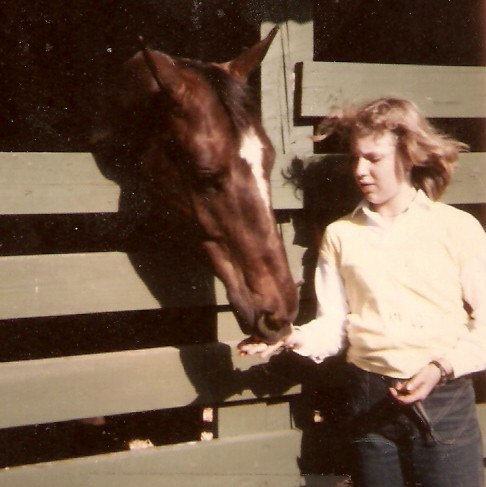
That ten year old girl with the horse in the picture?  That’s me and my first horse, Bart.  He was the horse I’d later develop such a close partnership with that I could ride him without any tack—no saddle, bridle, halter, rope—just me and my horse, from a walk to a gallop, through sliding stops and over jumps.  Our subtle communication and strong bond produced a seemingly effortless dance.  But it wasn’t always that way.

One of the first times I ever rode a horse, I was 9 years old and away at camp.  In a chaotic arena, my horse was packing me around in a bone jolting trot, my backside registering every stride.  With kids and horses everywhere, I couldn’t remember the instructions I’d been given.  I felt helpless, stuck atop something I couldn’t steer, couldn’t stop, and couldn’t make work.

Learning New Skills

Sound familiar?  Ever tried to learn a new skill?  How about learning to drive a stick shift for the first time?  There’s a lot to focus on.  Movements, thoughts, and reactions that will become second nature seem almost impossible to coordinate at first.  And if you pick up some bad habits in the process, unlearning them can take even longer.  Add stress, like a car too close behind you on a hill with your first clutch, or in your marriage, adding work demands, a kid you’re worried about, and never enough quiet time to figure it out—well, those second nature skills can be a challenge. So, what does this have to do with marriage therapy?

A lot goes into learning new things and new reactions to familiar but stressful situations.  The same goes for relationship skills.  Sorting out your last argument or stalemate, asking for the things you really want when you’re afraid you might not get them, listening to the other person do that too, when your own emotions are approaching red line?  There’s a lot coming at you, and it can feel like learning to drive a stick for the first time in downtown Seattle.  After a Mariner’s game.  With a car full of tired people.

Help is Available

Wouldn’t it be easier to learn that clutch somewhere quieter?  Say an empty dirt road on a lazy summer day?  With someone patient beside you, providing sound strategy and breaking down the steps, giving you room to practice the basics as many times as you need?  That person could gently give you proven tips on where to start, how to make course corrections, and where to go next as things improve.  It would make a difference to have a patient coach providing direct instruction when you need it, but helping you stay loose and even laugh a little when you get too frustrated.

There’s a lot to learning new skills in anything we do, and there’s even more to making them habitual.  I didn’t learn to jump fences on my horse without tack, or ride at a gallop blindfolded, without working with some patient coaches.  No one has it all together when they start a new process, hire a new coach, or begin marriage therapy.  But, just like a good riding coach or driving instructor can help to start turning things around in the first lesson, a good marriage therapist can give you tools to start turning things around in your marriage from the first session.  And she can see you through the process of making great relationship skills feel like a good habit.

Learn more about marriage therapy with me.

Liz Miller, LPC – Licensed Professional Counselor in Idaho, LMHC – Licensed Mental Health Counseling in Washington. Serving residents of Idaho and Washington.